The European Central Bank is ten years old this month. And they celebrated by demonstrating effortless superiority over the Federal Reserve Bank of America this week in a verbal duel over inflation.
The chairman of the Federal Reserve Bank, Ben Bernanke, unexpectedly made a speech last Wednesday on the dollar. He acknowledged that the slump in the dollar had triggered an "unwelcome" spike in inflation and the cost of imports into the USA. "We are attentive to the implications of changes in the value of the dollar for inflation and inflation expectations," Mr. Bernanke said and wowed that the Fed would "formulate policy" that took account of the weak dollar's input into inflation.
The dollar soared on news of the speech.
But on Thursday, at the customary news conference following the European Central Bank's monthly meeting, Jean-Claude Trichet also talked about inflation and revealed that the ECB's members had discussed raising rates and were seriously considering doing so next month. This came as a shock to many US analysts who had predicted that the ECB would "have" to follow the Fed and cut rates and thereby take pressure off the dollar, so the US could have both low rates and a strong dollar containing inflation.
The markets had to decide who was the most credible, Trichet or Bernanke. Trichet won hands down. Everyone knows that when Trichet mentions something in his monthly conference it is likely to happen. Bernanke's talk of "formulating policy" to take account of the weak dollar was judged to be just talk. The dollar slumped - making poor Bernanke's inflation problems even worse, as the oil price (which is priced in dollars) climbed in concert with the dollar's drop. There is not going to be any easy get-out for the Americans. If they want inflation to drop they are going to have to take some bitter medicine.
Given that the Federal Reserve Bank of America has been top dog for so long, this is a remarkable turn about, a historic event. Particularly as all the nay-sayers thought that the ECB and the euro project would never get off the ground. "I congratulate you on your impossible job!" said Nobel Economics Laureate Milton Friedman to the European Central Bank’s first chief economist, Ottmar Issing, in 1998.
Despite the Maastricht treaty being signed in 1992, and ratified by referendum in France (one of the countries joining the euro), many American (and some British) commentators continued to insist that the euro would not come into effect. But the ECB was born in June 1998, and the euro came into effect on 1st Jan 1999, with notes and coins coming into effect in 2002. The naysayers continued to predict doom - the press predicted chaos when the notes and coins came into effect (perhaps because the British press cannot imagine rolling out such a project among some 300 million people). But it went remarkably smoothly - perhaps a testament to the administrative skills of those Frankfurters at the ECB.
But the credibility of the ECB really took off when Jean-Claude Trichet took over as chairman in 2003. The Frenchman shared the desire of the Bundesbank members of the ECB for stern anti-inflation policy (when he was chairman of the Bank of France he operated the Franc Fort policy of using a strong currency to bring down inflation). But unlike the Germans (or his Dutch ECB predecessor Wim Duisenberg) he demonstrated an ablity to communicate with the markets. Instead of minutes being released, the ECB has a press conference straight after their meeting, where the chairman tells the press what has been decided and signals what will happen in the future. (The reason minutes are not released is to protect individual board members from undue pressure in home states, once a decision on rates is made, the ECB presents a united front). No other central bank holds such a monthly press conference and no other central banker takes questions from the press. Trichet's skill in negotiating the press conferences helped to anchor expectations on inflation and interest rates both among the eurozone public and in the markets.
The ECB's reputation rests on how it conducts monetary policy. Unique among central banks it sets it's own targets. And opted for the toughest targets around - a dual target of keeping CPI below 2% and monitoring money supply. They flatly refused to follow the Fed in cutting interest rates to 1% following 9/11, despite slower growth in the eurozone and near deflationary conditions in Germany, and determindly increased rates at the end of 2005 despite critics claiming the eurozone economy was too weak (the critics were wrong and the ECB was right).
Further the ECB was the first central bank to react to the credit crisis last year, providing swift liquidity to the markets when Ben Bernanke and Mervyn King dithered. As a result the euro-zone hasn't experienced a Northern Rock situation (and if only Northern Rock had a branch in the euro-zone, they'd have been able to borrow discreetly from the ECB and avoided the crisis altogether, in the way Barclays and others did - something all British banks will have noted). On the other hand the ECB hasn't made panic cuts in interest rates like the Federal Reserve which has cut from 5.25% to 2% in about six months. The ECB has held interest rates at 4% - providing operational flexibility combined with monetary hawkishnes.
The ECB's latest hawkish stance on inflation is very important for the world at large. The eurozone has grown to some 320 million people - they are a big enough market to affect global prices (unlike us in the UK). If the ECB in raising rates pulls off a lowering of commodity prices by slowing demand, they really will be the new masters of planet earth.
The ECB often comes under attack from economically illiterate politicians - especially that fool Sarkozy - but her growing reputation makes her more and more invulnerable. The euro project itself has had beneficial side effects. 16 million jobs have been created in the eurozone (more than in the USA despite the USA having a higher population growth rate). The original eleven countries have been joined by a further four countries, with Slovakia waiting to join shortly and Estonia, Latvia and Lithuania in the wings.
Many people wonder what would have happened if the UK had joined. Well the UK is such a large economy, the ECB would have had to take account of it when setting rates, which means that interest rates would have been higher in the eurozone if we were part of it - luckily for the europeans that we didn't join! Under Gordon Brown there are no plans to join at all. Future potential pro-European leaders of Labour like David Miliband will come up against resistance from anti-euro MPs like Ed Balls. But Labour is above all the pragmatic party. It all depends on events.
Finally, in pieces like this where you heap praise on Europeans, it is customary to find something, well British about them. I am happy to report that Trichet hails from Brittany (aka Little Britain) and is therefore a Celt and is therefore One of Us! ;-)
Saturday, June 07, 2008


Thursday, June 05, 2008
Partings

The talk after PMQs was all about David Cameron's hair. No, not his bald patch, his parting. He keeps changing it. God knows why. Perhaps his hairdresser is artistic? Perhaps he believes you are so last week if you haven't changed your hair a few times? As the Times put it, The Prime Minister may be unpopular but at least he doesn't look like a prat

Knowing Cameron's penchant to copy other politicians - witness how his gestures are so similar to Blair's he must have practised them in the mirror - I wonder if this time he was copying Nick Clegg? Take a look at the picture right. Clegg has many faults, but he is genuinely good-looking, one of the few people who can pull off a centre parting. Poor Cameron is not quite the pin-up his spin doctors try to make him out to be.
Monday, June 02, 2008
Telephone Calls from Gordon
I had to smile when I read the story that Gordon Brown telephones some of the people who write to him with complaints. There is somthing amusing about people picking up the phone only to find the Downing Street switchboard with Gordon on the line. The press predictably reacted with derision, but the practice of senior people phoning customers who've written in with complaints is quite common in the better private sector companies.
I used to work for a very senior manager who not only phoned people when a complaint was received, she usually sent them a bouquet of flowers or a bottle of champagne after she'd resolved the complaint for them. Because of her position in the organisation, the only complaints that reached her were explosive in nature, where the customer was so fed-up they were on the point of going to the ombudsman or the press. The company concerned had a horror of bad press - the rule was to avoid this at all cost. We also all knew that if the complaint got to the ombudsman, the ombudsman charged you an administrative fee just for handling the case, and would very likely find against you and award compensation to the customer on top. So, the senior manager reasoned, she might as well spend what she would have done on the ombudsman handling fee making the customer happy. It was a spectacularly successful technique. Most customers went away converted into hard-core fans of the company.
Behind this is a principle known as "service retrieval". There are essentially two types of angry customers. The first experiences a cold implacable sort of anger. If they are unhappy with your service they simply walk away to a competitor. The second sort gets furious and complains, angrily, hotly, vocally and often in purple prose.
Of the two types the first is the worst. Often you don't realize that problems have arisen in a particular area or division till the sales figures come in, at which point the damage has not only been done, but allowed to spread to other customers, and you still have no information why they walked away. The second vocal customer is great. Their anger is a function of their unwillingness to sever the relationship. Instead they contact you and give you a chance to put things right, whilst letting off steam and they tell you in great detail exactly what is wrong. The best companies seize this chance with both hands, because resolving the dispute well means that you not only keep the customer, they usually turn into loyal repeat customers, spreading word-of-mouth goodwill.
Voters are much the same. The ones who give you a scolding on the doorstep are engaging with you, giving you feedback and a chance to retrieve the situation. The ones who are blank and indifferent are the ones to worry about.
Of course the columnists in Fleet Street scorn this technique. Most are too grand to even reply to the comments that readers leave on their articles (maybe they feel they have jobs for life even if they write tripe). It must feel odd to them that the Prime Minister is prepared to engage with people like that. Actually life would go much more smoothly if more businesses copied the Prime Minister (Orange Broadband, I'm thinking of you!).
My only point of concern is that it got into the press. The company I mentioned at the top of this piece would never in a million years have publicised that they dealt with customers in that way - it would have encouraged those who didn't have a complaint to write in just to get their champagne, and it would have been hard to distinguish between the real complainants, who have important information about where your organisation is going wrong, and the chancers. No matter how good an idea is, it's value is nullified as soon as you publicise the technique.
I'm disturbed at the amount of stuff that seems to end up in PR Week. These PR people don't seem to understand the first principle of PR, which is that the PR person stays in the background and the techniques are not displayed because that defeats the purpose. Gordon Brown appointed Steven Carter and his people in January. In December 2007, just before their appointment, YouGov was showing Labour just five points behind in the polls, which is manageable for mid-term. The latest YouGov poll showed Labour at 24 points behind.
It's hard not to conclude that the new PR isn't working, that while Gordon Brown has made mistakes, the effect has been compounded and magnified by leaks and bad PR advice. Gordon Brown in fact did better when he was "just Gordon", and relying on trustworthy Labour party advisors who would have put their eyes out before they leaked to the press. People knew he was a bit grumpy and a bit hopeless with presentation, and they didn't mind. Remember when he first became PM, and he did a presentation with the screen obscuring his face? PR Week might have curled their lip at the amateurishness of the in-house Labour team, but the public just shrugged and smiled. By contrast the electorate are thoroughly irritated with the constant re-launches that have become a feature of Steven Carter's regime.
My advice to Gordon would be to sack his PR team, stop touring the studios and simply get on with running the country. The country will thank him for it.

Tuesday, May 27, 2008
Fuel Duty and Petrol Prices
The following figures come from the AA. Unleaded petrol was introduced in 1988. The following table shows the pump price in pence per litre, and the percentage of the price that is fuel duty.
For some unknown reason their table only goes to 2005 - the 2007 figure comes from Petrol Prices.com. If you want to see the diesel prices, click the AA link - the fuel duty as a % of pump price of diesel tracks that of unleaded petrol.
There are several interesting things to note. First, in 2000, Labour abolished the fuel-price escalator that was introduced by the Conservatives in 1993, and the fuel duty as a % of the pump price immediately started to drop. Fuel duty was also frozen from 2003 to 2007.
The price at the pump at the moment for unleaded is 114.9p. This is 42% higher than the 2000 price of 80.77p, which implies an increase of 4.5% per annum. Which doesn't sound too bad put like that, till you realise that most of the increase has happened in the last couple of years.
Part of the point of fuel duty is to persuade people to buy smaller more-fuel efficient cars when they replace their existing cars. The other part is to assure manufacturers who have several years lead time when designing cars that yes, fuel-efficient cars will be marketable regardless of what happens to the oil price, thanks to fuel duty. This was the key lesson from the 70's when several American manufacturers produced innovations like electric cars, which came onstream just as the oil price collapsed circa 1985. They lost money and refused to invest anymore in the expensive technology - it's no accident that all the fuel-efficient cars come from Japan and Europe where fuel-duty has been ratcheted up.
The national fleet gets replaced on average every seven years or so. Constantly jacking up the fuel-duty should in theory have meant that by now everyone would have been driving efficient cars. Some people have switched to fuel-efficient cars - but SUVs also took off after 2000, as the plethora of 4x4s and large family cars on the roads indicate.
OK SUVs were developed for the American market, but why have so many Brits bought them? In part this must have been a function of the way the pump price remained flat at around 80p from 2000 to 2004, while earnings were rising steadily and Britain was getting rich. How many valuable commodities have a flat price for five years? Did Blair and Brown make a mistake in 2000 coming off the fuel-price escalator? If staying on had forced everyone into smaller cars by now, eight years down the line, would people be able to withstand the oil price spike better now?
The government has also been trying hard via speed-cameras and advertising to get people to slow down when driving, not just because of road deaths, but because speeding burns excessive fuel. We've failed, thanks to campaigns in the Daily Mail about the right of the motorist to speed. Only now with the oil price hike are people going to the AA's website to read about how sticking to the speed limit saves you money.
Funnily enough the same lorry drivers who forced us off the fuel-price escalator in 2000 are complaining again now. The government shouldn't budge. It just means postponing the evil day when people have to adjust to a world of high oil demand and hence high oil prices. I note the Conservatives are keeping silent about this. Their idiot supporters are much more vocal though. It's Gordon's fault the pump price is so high, they yell, ignoring the fact that the fuel duty hasn't increased nearly so fast under Labour as under the Tories. These silly people probably believe that a Conservative government will cut fuel duty. Some probably believe the Conservatives will strike oil in Notting Hill. As if.
1988 36.73 61.10%
1989 38.52 59.25%
1990 42.76 58.65%
1991 46.06 61.55%
1992 46.08 65.55%
1993 49.54 67.13%
1994 51.70 69.64%
1995 54.20 73.17%
1996 56.66 76.10%
1997 61.97 77.14%
1998 65.17 81.48%
1999 70.58 81.14%
2000 80.77 75.07%
2001 76.78 75.33%
2002 74.33 76.56%
2003 76.56 75.26%
2004 80.87 73.18%
2005 87.22 68.89%
2006
2007 95.10 66.7%
For some unknown reason their table only goes to 2005 - the 2007 figure comes from Petrol Prices.com. If you want to see the diesel prices, click the AA link - the fuel duty as a % of pump price of diesel tracks that of unleaded petrol.
There are several interesting things to note. First, in 2000, Labour abolished the fuel-price escalator that was introduced by the Conservatives in 1993, and the fuel duty as a % of the pump price immediately started to drop. Fuel duty was also frozen from 2003 to 2007.
The price at the pump at the moment for unleaded is 114.9p. This is 42% higher than the 2000 price of 80.77p, which implies an increase of 4.5% per annum. Which doesn't sound too bad put like that, till you realise that most of the increase has happened in the last couple of years.
Part of the point of fuel duty is to persuade people to buy smaller more-fuel efficient cars when they replace their existing cars. The other part is to assure manufacturers who have several years lead time when designing cars that yes, fuel-efficient cars will be marketable regardless of what happens to the oil price, thanks to fuel duty. This was the key lesson from the 70's when several American manufacturers produced innovations like electric cars, which came onstream just as the oil price collapsed circa 1985. They lost money and refused to invest anymore in the expensive technology - it's no accident that all the fuel-efficient cars come from Japan and Europe where fuel-duty has been ratcheted up.
The national fleet gets replaced on average every seven years or so. Constantly jacking up the fuel-duty should in theory have meant that by now everyone would have been driving efficient cars. Some people have switched to fuel-efficient cars - but SUVs also took off after 2000, as the plethora of 4x4s and large family cars on the roads indicate.
OK SUVs were developed for the American market, but why have so many Brits bought them? In part this must have been a function of the way the pump price remained flat at around 80p from 2000 to 2004, while earnings were rising steadily and Britain was getting rich. How many valuable commodities have a flat price for five years? Did Blair and Brown make a mistake in 2000 coming off the fuel-price escalator? If staying on had forced everyone into smaller cars by now, eight years down the line, would people be able to withstand the oil price spike better now?
The government has also been trying hard via speed-cameras and advertising to get people to slow down when driving, not just because of road deaths, but because speeding burns excessive fuel. We've failed, thanks to campaigns in the Daily Mail about the right of the motorist to speed. Only now with the oil price hike are people going to the AA's website to read about how sticking to the speed limit saves you money.
Funnily enough the same lorry drivers who forced us off the fuel-price escalator in 2000 are complaining again now. The government shouldn't budge. It just means postponing the evil day when people have to adjust to a world of high oil demand and hence high oil prices. I note the Conservatives are keeping silent about this. Their idiot supporters are much more vocal though. It's Gordon's fault the pump price is so high, they yell, ignoring the fact that the fuel duty hasn't increased nearly so fast under Labour as under the Tories. These silly people probably believe that a Conservative government will cut fuel duty. Some probably believe the Conservatives will strike oil in Notting Hill. As if.

Sunday, May 25, 2008
Why do the press have such a poor understanding of the Labour party?
I had to smile today when I saw the Sunday Times claiming that David Miliband was about to become Labour leader - and all by just networking with some other MPs! Anyone would think they didn't understand the difference between Labour and the Tories.
You'd think they'd have learnt their lesson when their predictions that Alan Johnson would become leader and then deputy leader didn't materialise. Careless newspapers also like to claim that Jon Cruddas and Hillary Benn are also potential leadership candidates, ignoring that they too both got defeated in the deputy leadership contest.
At the root of this misunderstanding is the belief that to gain leadership of Labour you simply need to curry favour in the Westminster village (with MPs, press and apparatchniks) - after all that is how the leadership of the Conservatives and Liberal Democrats works. But it's different in Labour.
Apart from the fact that the Labour party has a very complicated electoral college where MPs, constituency members, unions and affiliates such as the Co-op all have their say, the Labour membership is the most diverse of the three main political parties. People from all walks of life are represented - aspirant working class types who were the first in their families to go to university and who support New Labour, and old socialists who still think Michael Foot was hard done by; the old middle class (by which I mean their family have been middle class for at least three generations) who believe conspicuous consumption is bad manners, and the new middle class people who secretly aspire to the Blair-bling lifestyle; people who are descended from barons and people who were formerly Militant; business people and anti-capitalists; people from every single religion (including atheists) and people of every skin colour.
This diversity is Labour's strength - if you can forge a platform that appeals somehow to this entire range of people, you have a good chance of winning a general election, as Britain itself is this varied and diverse. The downside is that you have to work extremely hard to build such a platform. It took New Labour a good six years to formulate their ideas, and even so, Blair was nervous enough in his leadership battle in 1994 to ask Brown to step aside so as not to split his vote. In the end he got 57% of the vote, the lowest being among the affiliates (52.3%).
It's not possible to forge such a platform just working out of Westminster/London, as Alan Johnson and Jon Cruddas have found. The mistake Cruddas made was to believe that all Labour constituencies are just like his working-class constituency of Dagenham. Actually the problems he faces there are shared by some constituencies in the north and midlands, plus other London constituencies but are quite alien to parts of the south coast and the western cities like Bristol and Cardiff. As a result he was far behind Harriet Harman and Hilary Benn when it came to the individual members. The main people impressed with him were the affiliates, who co-incincidently have a big working class element. Alan Johnson on the other hand relied on endorsement in Parliament. He was massively ahead amongst the MPs. He should have done better among the constituency members but was too lazy to visit them, replying purely on puff pieces in the press. Constituency members were not impressed.
The above should illustrate how hard it will be to become leader of the Labour party, especially if there are several candidates. It's simply impossible to build the platform and coalition in just a few weeks. And if you are a former apparatchnik like the Miliband brothers, Balls and Purnell, whose only experience is dealing with Whitehall and the London press, it will be even harder.
My advice to the hopefuls is to spend the next two years touring all the constituencies and getting to know not just all the various sub-cultures (all of which exist in the electorate at large) but also listen to the feedback from the activists who are at the sharp end. Crewe and Nantwich may have been lost because the local party didn't have enough input into the by-election. Understand that the constituencies tend to be more middle class than the affiliates and that to win the leadership you need somehow to appeal to both. If you are too working class, you lose the constituency members especially in the south, if you have too much emphasis on the parliamentary party, you lose the affiliates. And all of us, MPs, members and affiliates want to see how the candidates perform. At the moment we simply don't know enough. Having to deal with the advsere situation over the next two years will be beneficial training for the candidates. Perhaps Purnell will learn to be less smug, Balls less abrasive and Yvette Cooper might learn to wear more make-up and get a softer haircut.
There is something else. I've written before about how the Obama phenomenon is in large part being propelled by a new generation coming of age, and that this will affect politics in the UK too. The Tories are not tapping into this new group - most of their support comes instead from the over 55's who voted for Thatcher. Therefore it is imperative that the next iteration of the Labour party takes account of the new group. But such a re-working can't be forged in a few weeks. It will take many months of hard thinking.
This is another reason to resist the hysteria in the press for a snap leadership election. Constantly changing the leadership is merely displacement activity that gets in the way of hard questions and hard decisions. Use the time to the next election to think and listen. Then when the starting gun is fired for the leadership we should have some properly evolved positions to choose from.
Saturday, May 24, 2008
What Happens Next?
The newspapers predictably are full of articles saying in effect that "Brown must go". They would wouldn't they?
Ever since 1990, when the Tories decapitated Margaret Thatcher in a thrilling putsch which had everything the press could want about it - the chilling speech in the Commons from Howe, the betrayals of the cabinet, the tears outside Downing Street - they've had a taste for leadership challenges.
From 1992 to 1997, the Tories were plagued by plots and rumours and phone-lines being laid, which the press gleefully stoked, and which built to such a point that Major couldn't stand it anymore and triggered a leadership contest himself in 1995. Fat good all this plotting did for the Tories when you look at the outcome of the '97 election. There was a brief period of stability during Hague's reign, but then it started over again. Between 1997 and today, the Tories have had four leaders not counting John Major. Has the constant chopping and changing done them good? In my opinion it delayed their rehabilitation. Leadership contests were displacement activity that enabled the party to avoid asking hard questions of itself. But the press loved the drama of it all.
Then the LibDems got into the leadership change thing. Charlie Kennedy was pushed, after a tragic press conference when he so clearly wanted to stay. Then the dagger was put into Ming. Earlier this year, it started to look like people were going for Clegg too, when rumours circulated that ballot papers voting for Huhne arrived after the election deadline had passed, and this supposedly made Clegg's election somehow invalid. But Clegg's been given a stay of execution, because attention has turned to Gordon Brown.
The press were rather disappointed with the smooth transfer of power from Blair to Brown. Blair could say that he'd been leader for 13 years and had won three elections. He could point out that he had pre-announced his departure in late 2004, before the general election, and therefore leaving was his own choice. He could point out that that he left with a standing ovation in Parliament ringing in his ears. And those in the party who wanted him to leave as punishment for Iraq could say that he did fall on his sword, if not quite Japanese-style, and that the party managed the punishment without the humiliation heaped on Thatcher. Labour soared in the polls as a result. The public wanted Blair to go, but they also liked the smooth succession. Unlike the press, they have no taste for excessive humiliation of leaders by their parties.
The latter point is very important. Are the public really clamouring for a leadership putsch? All the polls say that the public thinks all potential successors would be worse. People who say Brown should go say that he is useless at presentation. Well yes he is. But is not being liked by John Humphries a bigger reason to be sacked that commiting your country to war without discussing it with your cabinet first? Really? Then there are those who say that a putsch must happen as MPs are "desperate to save their jobs" and this is of utmost importance. Really? If anything is more likely to put the public off it is MPs thinking about their own jobs. There are two years to go before the next election. Plenty of time for MPs in danger of losing their seats to prepare and line up work for when they leave. Most will fall on their feet.
Then there is the issue of who would succeed. Blair didn't promote people, despite the huge amount of talent in the parliamentary party. He got attached to people and kept them - so John Reid did umpteen departments, Mandelson and Blunkett were brought back several times when they should have been left on the backbenches. The same old faces circulated. He didn't bother with the next generation. It was all about his own comfort. Kinnock by contrast had managed to give both Blair and Brown their chance when they were in their early thirties - by 1997 they had been in the shadow cabinet for nearly ten years. It was not till Gordon Brown took over as Prime Minister that the next generation was given a chance. Most are in their late thirties or early forties, and have had less than a year in cabinet. These men and women, Blairites, Brownites and some who are simply Labour, need time to hone their skills. Why should we sacrifice their futures in the way the Tories selfishly sacrificed William Hague's?
People often ask why Brown was the sole candidate in 2007. It's because the people who wanted to stand (Clarke, Milburn) were people the membership wouldn't have voted for in a million years, and the potential nominees in parliament knew this. The membership wouldn't even give Alan Johnson and John Cruddas the deputy leadership, forget leader. At the same time, the people the membership did want, didn't want to stand, for a variety of reasons, some of which were personal. This is a point often overlooked by the commentariat. In order to become a leader it's not enough that the party wants them, they have to want the job too and allow their name to be put forward in the first place. We don't conscript leaders in the Labour party!
So what is going to happen? Gordon Brown will lead us into the next election and have his chance to face the electorate. We do not wish to copy the Tories prior to 1997 when they ploted and stabbed in a desperate and unsavory attempt to save their jobs.
Instead we are going to go into the election in the way the Spartans went into Thermopylae - knowing that we will certainly get killed but sacrificing ourselves anyway in order to do as much damage to our opponents. No point having any more attempts to "win over" the electorate with tax giveaways and interviews and re-launches - tried that, didn't work. It's got to the stage where no matter what we do or say, the public isn't listening. So we might as well spend the next two years in government laying a series of Poison Pills, in order to ham-string and hurt any incoming Tory government. The point of Thermopylae is that though the Persians took the pass, they incurred so much damage it laid the seeds for their future permanent defeat. And if we can do some purely Labour things too in the next two years, why not? In a funny way it is liberating to be in a situation where the public isn't listening. It means there are no constraints on us, because the outcome will be the same anyway. We might as well enjoy the next two years. Who knows, loosening up and being ourselves might even get us rehabilitated!
I would advise Gordon Brown to get some sleep and rest and take time to play with his babies. And not to bother touring the TV stations with re-launches. The public arn't listening and more importantly Gordon doesn't enjoy them. So why bother? Part of the liberating aspect of this situation is that the old rules can be chucked. Don't feel like speaking to Humphries and co? Then dont! Instead, let the newbies in the cabinet have a go. Indeed let them take turns at PMQs as well in a sort of two year audition for the succession.
Of course the press won't be able to wait two years for a succession story. I predict that they will either turn back to the LibDems to try to stoke a leadership challenge there. Or maybe have a look at the SNP and Greens. They haven't had a leadership change for some time, have they?

Wednesday, May 21, 2008
The Toff Business
Jonathan Freedland has an article in the Guardian where he says that class war does have an impact on politics - but only if it is handled very very carefully.
He points out that the Tories are very sensitive to charges of elitism. For instance they managed to get the owners of the infamous Bullingdon picture to stop granting further publication (though luckily organisations such as the Telegraph, which got permission to publish before the ban, still display the picture - you can see it here). And he quotes a remark in the FT:
As Stefan Stern wrote in the Financial Times last week: "If David Cameron is so proud of the 'great school' he attended - it was Eton, by the way - why does he never mention it by name in public?"
Also, it's no accident that the last three Tory prime ministers - Heath, Thatcher and Major were all state educated - they acted as a cloak for the elitists in their party.
So why has the Labour toff campaign failed? In part because it was too crude and heavy-handed. People don't mind wealth if it has been earned. And people don't mind eccentric clothes either, which is what top hats and tails is - this is Britain after all, you can wear whatever you like no matter how silly.
What they do mind is if it is perceived that they are being shut out of a club. The real criticism of the Bullingdon club for instance was never the silly clothes. It is that they refuse to let jews or black people join (still, even though it is 2008). And because the club exists to harrass ordinary people by smashing their property and enjoying the distress this caused before the victims were compensated (what a jolly jape, as Boris would say).
Unfortunately the Labour campaign has focused just on clothes and not on deeds.
It's also instructive to see how the Tories counter charges of elitism. Their main charge against Tamsin Dunwoody was that she had a large house/farm in Wales and was listed in DeBretts and claimed therefore she was a toff too, (though her circumstances are far removed from Timpson's £53 million fortune). Elsewhere, in the Guardian, among the comments you get frequent assertions that "the Labour party is a middle-class party", "the majority of the Labour cabinet went to public school", "the majority of Labour MPs went to public school" and a variation of this "the majority of Labour MPs went to grammar school, then they abolished them, what hypocrites". And it's clear that these untrue prejudices are widely held.
Therefore the first thing the Labour party should do is counter these untruths. Actually, as detailed in my previous post, 82% of parliamentary Labour MPs are state educated (with 53% of Labour MPs having been to comprehensives), while 59% of Tory MPs are public school educated. So a potential poster to publicise this could say something like
93% of Britain is state educated.
82% of Labour MPs are state educated.
7% of Britain went to public school
59% of Tory MPs are public school educated.
Labour reflects Britain. The Tories do not.
Another poster could say "This is the first government in history to be dominated by state-educated people. This is the first government for x hundred years to deliver 11 years of continuous growth. This is not a coincidence". Hopefully by the next election, this will be 13 years of growth.
Cabinet ministers such as David Miliband, Ed Miliband, Jacqui Smith, Yvette Cooper, Hazel Blears, Alan Johnson, John Denham, Hillary Benn and others should be telling people how proud they are to have been educated under the state system. Alan Johnson is the only one who has successfully got his background across. The rest need to raise their profiles.
Finally, people were prepared to give Timpson a pass because his family are manufacturers (there is an understanding that you don't succeed in business without effort no matter how exalted your background is). People were prepared to give Boris Johnson a pass because he is descended from a Turkish refugee (and claimed that his great-grandmother was a slave) - the conclusion of the public was he was a pretendy toff not the real thing. But they are less willing to give a pass to those who are of real inherited priviledge (hence the constant irritation with the antics of the House of Windsor, excepting the Queen). Therefore we should be very selective where we use the toff label.
The main person in the conservative party who is vulnerable is David Cameron himself. He is descended from James I, via Margaret Tudor, Henry VIII's sister, and got his first job because someone from the palace put in a word for him. And then he married the daughter of a baron. He messed up at On Digital (it went bust because of lack of subscribers, despite Cameron being hired as PR person to get punters to sign up). But never mind, that old boys network the Conservative party found him a safe seat with attendant income. And then he pretends to be an ordinary bloke.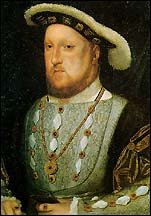
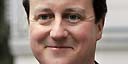
Incidently, the link between Cameron and the mad bad Henry VIII is especially interesting as there is a family/genetic resemblance. Take a look at these picture - the eyes and the shape of the face are the same. I wonder what else he has inherited.
He points out that the Tories are very sensitive to charges of elitism. For instance they managed to get the owners of the infamous Bullingdon picture to stop granting further publication (though luckily organisations such as the Telegraph, which got permission to publish before the ban, still display the picture - you can see it here). And he quotes a remark in the FT:
As Stefan Stern wrote in the Financial Times last week: "If David Cameron is so proud of the 'great school' he attended - it was Eton, by the way - why does he never mention it by name in public?"
Also, it's no accident that the last three Tory prime ministers - Heath, Thatcher and Major were all state educated - they acted as a cloak for the elitists in their party.
So why has the Labour toff campaign failed? In part because it was too crude and heavy-handed. People don't mind wealth if it has been earned. And people don't mind eccentric clothes either, which is what top hats and tails is - this is Britain after all, you can wear whatever you like no matter how silly.
What they do mind is if it is perceived that they are being shut out of a club. The real criticism of the Bullingdon club for instance was never the silly clothes. It is that they refuse to let jews or black people join (still, even though it is 2008). And because the club exists to harrass ordinary people by smashing their property and enjoying the distress this caused before the victims were compensated (what a jolly jape, as Boris would say).
Unfortunately the Labour campaign has focused just on clothes and not on deeds.
It's also instructive to see how the Tories counter charges of elitism. Their main charge against Tamsin Dunwoody was that she had a large house/farm in Wales and was listed in DeBretts and claimed therefore she was a toff too, (though her circumstances are far removed from Timpson's £53 million fortune). Elsewhere, in the Guardian, among the comments you get frequent assertions that "the Labour party is a middle-class party", "the majority of the Labour cabinet went to public school", "the majority of Labour MPs went to public school" and a variation of this "the majority of Labour MPs went to grammar school, then they abolished them, what hypocrites". And it's clear that these untrue prejudices are widely held.
Therefore the first thing the Labour party should do is counter these untruths. Actually, as detailed in my previous post, 82% of parliamentary Labour MPs are state educated (with 53% of Labour MPs having been to comprehensives), while 59% of Tory MPs are public school educated. So a potential poster to publicise this could say something like
93% of Britain is state educated.
82% of Labour MPs are state educated.
7% of Britain went to public school
59% of Tory MPs are public school educated.
Labour reflects Britain. The Tories do not.
Another poster could say "This is the first government in history to be dominated by state-educated people. This is the first government for x hundred years to deliver 11 years of continuous growth. This is not a coincidence". Hopefully by the next election, this will be 13 years of growth.
Cabinet ministers such as David Miliband, Ed Miliband, Jacqui Smith, Yvette Cooper, Hazel Blears, Alan Johnson, John Denham, Hillary Benn and others should be telling people how proud they are to have been educated under the state system. Alan Johnson is the only one who has successfully got his background across. The rest need to raise their profiles.
Finally, people were prepared to give Timpson a pass because his family are manufacturers (there is an understanding that you don't succeed in business without effort no matter how exalted your background is). People were prepared to give Boris Johnson a pass because he is descended from a Turkish refugee (and claimed that his great-grandmother was a slave) - the conclusion of the public was he was a pretendy toff not the real thing. But they are less willing to give a pass to those who are of real inherited priviledge (hence the constant irritation with the antics of the House of Windsor, excepting the Queen). Therefore we should be very selective where we use the toff label.
The main person in the conservative party who is vulnerable is David Cameron himself. He is descended from James I, via Margaret Tudor, Henry VIII's sister, and got his first job because someone from the palace put in a word for him. And then he married the daughter of a baron. He messed up at On Digital (it went bust because of lack of subscribers, despite Cameron being hired as PR person to get punters to sign up). But never mind, that old boys network the Conservative party found him a safe seat with attendant income. And then he pretends to be an ordinary bloke.

Incidently, the link between Cameron and the mad bad Henry VIII is especially interesting as there is a family/genetic resemblance. Take a look at these picture - the eyes and the shape of the face are the same. I wonder what else he has inherited.


Tuesday, May 20, 2008
LibDems will definitely ally with Conservatives in a Hung Parliament
The Telegraph has a piece about the LibDems deciding to ally with the Conservatives, which confirms an earlier piece in the FT in February that they were considering doing this. According to the Telegraph:
Nick Clegg, the Liberal Democrat leader, will support David Cameron if the Conservatives are the largest party in a hung Parliament.
In consultations with senior members of the party, he said he was prepared to take the necessary steps that would enable the Tories to form a minority administration.
..........Before now, it had been thought likely that Mr Clegg would wait until after an election to embark on negotiations with both of the main parties in the event of a hung Parliament.
But The Daily Telegraph understands that he has decided that the public would not forgive him if he propped up a Labour administration that they had voted to throw out.
Of course Clegg leaves out of his calculation that many of the seats the LibDems hold are by virtue of Labour voters voting tactically to keep the Tories out. He seems to think that people vote LibDem because they are LibDem fans.
There are 63 Liberal Democrat MPs in parliament, and they won their seats in 2005, under Charlie Kennedy, who was palpably left-of-centre and indeed promised such things as a 50% top rate of tax (attracting many old labour voters in the process) and an anti-Iraq stance. If these Labour voters vote LibDem in the next election simply to deny the Tories a majority,and then find that their LibDem MP has crawled into bed with those same Conservatives, they would be horrified especially as Cameron and co were more gung-ho about Iraq than most Labour MPs and he is certainly not interested in progressive taxation as his recent comments attest.
So what should Labour do about this? The current position is a legacy of the 1980's, when the Labour party destructively split into Labour and the SDP. Many voters opted for the SDP/Alliance because they didn't like the Tories but were afraid of the way the hard-left seemed to be taking over the Labour party in the absence of the moderates, who had gone SDP. By 1997 however, Millitant and Michael Foot were decisively vanquished. There was no reason for Labour voters to have to continue voting LibDem in certain parts of the country - except expedience. In the run-up to 1997, New Labour didn't want to spend time re-claiming these areas when they needed to concentrate their fire-power on Labour-Tory marginals. So Blair famously wooed Ashdown, so that Labour voters felt comfortable voting LibDem in places like the south-west "to keep the Tories out".
But what on earth is the point of Labour voters going LibDem if it results a conservative government? No point at all.
The first thing Labour should do is publicise this new alliance between the Tories and LibDems. Many people are unaware of it, and still assume that the LibDems are to the left of Labour. The next thing we need to do is start re-claiming our lost territory. The next election is a straight up fight between Labour and the Conservatives. The LibDem vote is the softest of the three parties and should be squeezed. The only question is who gets those votes. We must make it clear that a vote for the LibDems is a vote for the Conservatives, who are Thatcherites maskerading as "compassionate conservatives" in the manner pioneered by George Dubya Bush.

Sunday, May 18, 2008
The Poison Pill Strategy
The opinion polls continue to look dire, with YouGov in the Times showing the Conservatives on 45%, Labour on 25% and the Liberal Democrats on 18%. These may of course just be the mid-term blues. But it is possible that Labour will lose the next general election.
Before people leap out and call for Gordon Brown to step down and make way for someone else, all polls (including the YouGov one) show that changing the leader wouldn't make any difference. The real damage to the Labour party started with the Iraq war, and as soon as people started regarding us sceptically, it was on the cards that the scepticism would snowball and they would start to blame us for everything and anything they didn't like - sub-prime mess in the USA, it's Gordon's fault for not regulating lending in America; oil price hike, it's Gordon Brown's fault for not controlling world oil demand and so on. There is not a lot you can do about this once people get into this negative frame of mind, especially when it is magnified by a hostile press. Any successor to the PM would face the same problems. We also simply don't have the time to change leaders and in any case potential leaders (my preferred successor is Ed Miliband) need time to develop.
However, the next election won't be till 2010, which means we still have two years to go. If we are going down, we might as well go down as Labour, it won't make any difference to the outcome, but will cheer up our supporters and make things a little difficult for the succeeding government.
What do I mean by this? Well I was thinking primarily about tax and the example provided by Germany. The red-green government led by Schroeder followed a New Labour like strategy, cutting the top rate of tax from 51% to 42%. However, the red-blue Grand Coalition led by Angela Merkel has done something quite different and made the tax system more progressive.
First lets look at the German tax system. As of 2008, corporation tax is 15%, and businesses pay a 14%-17% municipality tax in addition. VAT is 19%. Individuals and employers in Germany pay about 20% each in social insurance and West Germans pay a solidarity surcharge of 5.5%. The income tax regime is as follows:
Tax % Tax Base (EUR)
0 Up to 7,664
15% 7,665-52,152
42% 52,153-250,000
45% 250,001 and over
Using an exchange rate of 1 euro = £0.7962, you can see that the 45% rate kicks in at £199,050.
Obviously some of the German taxes are completely unacceptable to a Labour government (particularly the VAT rates). However the shape of the income tax regime is very attractive. I think we could use the next two years to cut the basic rate to 15% and put in a 45% top rate for those earning over say £180,000.
Of course the high earners in the City will scream blue murder about this. But given that we might lose the next election anyway, we should simply shrug and tell them to take it up with the next government. If the next government turns out to be Labour, we can then point to a mandate for the regime.
We can also point out that in the City of London's main rival, New York City, high earning individuals are subject to 35% federal tax, 3.65% New York city income tax and 6.85% New York state income tax, making a grand total of 45.5%. The highest bracket 6.85% New York state tax kicks in at $40k (approx £20k) and the 3.65% New York city tax kicks in at $500,000 (approx £250k) and the 35% federal income tax kicks in at $357,701 (approx £179). Even if you earn less that $500k, you get clobbered because New York state has a highly progressive tax regime with five tax bands starting at 4% for low earners. New York city also has a lot of bands starting at 1.9%. And strangely (or not!) you don't see New York financial people decamping to low-tax Georgia. New Yorkers are now thinking of a millionaire's surcharge, and Americans don't have a non-dom system - if you are a citizen, you pay tax regardless of where on earth you live. Also note that the likely incoming Obama government will raise federal taxes on the highly paid.
How would this affect a possible incoming Tory government? In my opinion they will struggle to reverse the tax regime. If abolishing a 10p rate which applied to £2230 of income caused people to get upset, then raising the basic rate back to 20% from 15% (affecting income on the £34k above the personal allowance) in order to pay for a cut in the top rate will cause riots. They could try to raise VAT, but will find it has a knock-on effect on inflation and interest rates. (Mrs Thatcher managed this in the early 80's, abolishing the 25% initial rate of tax and doubling VAT in order to cut the top rate - but she only got away with it because the Labour party had split into Labour and the SDP. That's not going to happen again.) They could try to cut spending, but oops they have pledged to keep to Labour spending for three years, and in any case David Cameron has made much about how he will spend more than Labour on the NHS, defence, and whatever takes his fancy depending on the day of the week.
This strategy means that even if Labour loses the next election, Labour people can go to their beds happy that they've cut tax for the poor and made the high earners contribute more.

Friday, May 16, 2008
The Confucian State
Many commentators have expressed surprise at how well China has coped with her earthquake, dispatching aid, help and the Prime Minister Wen Jiabao. China, the story went, was a military/communist dictatorship akin to Burma's. It's taken two disasters, in Burma and China, to demonstrate the difference.
It's easy to see why the misunderstanding arose: under Mao and his extremist wife, and the Cultural Revolution, China was a brutal communist dictatorship. But starting in 1979 with Deng Xiaoping, China abandoned economic communism and seems to have abandoned social communism too. But they are clearly not a democracy, so how to define the Chinese state?
It's becoming increasingly clear that after flirting with western ideas in the 20th century (a corrupt version of democracy before WW2 and communism after), the Chinese have reverted back to the system of government that worked best for them for several millenia - the Confucian state.
Confucianism, which first developed in around 400 BC, is a system of government based on technocrats. Confucius was distrustful of aristocracy and inherited power, and instead was the first to come up with the idea of government by a permanent civil service, which was entered into by examination, and which wielded power while the Emperor remained a figurehead (hence our term "mandarin" for civil servants). You could be the son of a nobody and yet wield huge power if you were clever enough to pass the examinations to get into government. Confucian government was also deeply conservative, keeping detailed historic records so the government could search for precedents before enacting any law. "Documents, conduct, loyalty and faithfullness" were his four key rules of government. In addition he believed in the traditional Chinese reliance on clans and family ties.
And despite his conservatism, Confucius believed that although rebellion was wrong if a true king reigned, a government that provoked it and could not control it ought to be replaced, as it had proved itself illegitimate. Hence confucian governments paid great attention to the prospect of trouble brewing, as they did not want to make themselves illegitimate by messing up. (You could also say that the rebellion that led to Mao's government after WW2 was justified by ordinary non-ideological Chinese people at the time as being in accordance with their traditional Confucian values, as the previous government had failed to defend them from the Japanese and had hence made itself illegitimate).
And so we come to modern China. They have reverted to a Confucian system par excellence - a government of technocrats, very conservative, always worrying about potential uprisings (hence the move by the government in recent years to rapidly increase rural incomes to forestall unrest, and the related moves in Tibet to quell demonstrators) and very much concerned with "face" or conduct. And anyone who has done business in China can attest to the power of the clan system in controlling commerce. Some modern Chinese scholars have even gone so far as to propose the government introduces an upper chamber of deputies, Xianshiyuan, that is entered into by examination rather than election, which would complete their reversion to Confucianism. It's a complete contrast to the values of the Cultural Revolution, which imprisoned intellectuals, rather than revered them as in the Confucian system.
In this context, the speedy response of the Chinese government to the earthquake, including the presence in the area of the Prime Minister, is easily explained. According to Confucian thought, the government would become illegitimate if it failed to do it's duty and respond properly to the disaster, and would open itself to replacement. So of course they are doing everything they possibly can to demonstrate good government to the people in the affected regions.

Tuesday, May 13, 2008
Alistair Darling's statement
Never let it be said that Labour does not cut taxes. Not only has the basic rate of tax been cut from 22% to 20%, effective this April, but in a statement in the commons this afternoon, Alistair Darling announced that he was raising the personal tax-free allowance as well. This means that the allowance will have increased from the £5225 in the 2007/8 tax year to £6035 in the 2008/9 tax year, an effective increase in the allowance of 15%. Some 22 million taxpayers will benefit (far out-weighing those who were disadvantaged by the abolition of the 10p rate). Plus the increase in tax credits for people with families, announced previously, will continue to go ahead.
Some commentators have likened this to the tax rebates the US government is giving to their citizens, but the US tax rebate is a one-off, they won't get it next year. Whereas Darling's increase of the personal allowance will not only be permanent (the personal allowance will not be reduced next year - not going into a general election!), but it will continue to increase in succeeding years in line with inflation to comply with the Rooker-Wise parliamentary amendment, passed in the 1970's, which requires governments to increase the personal allowance in line with inflation unless they have a good reason not to. The only budget since the 70's that froze the personal allowance was the vicious Thatcher/Howe budget of 1981, during which he also abolished the 25p lower rate of tax that Labour had introduced in 1978, so that these low tax-payers suffered an increase to the then 30% basic rate of tax. And it all happened when the inflation rate was over 10%. The other Thatcher/Howe masterpiece was the 1979 budget when they raised VAT from 8.5% to 15%. (Tories who dare to criticize Labour on tax have very short memories indeed).
Perhaps Labour should develop this theme, and continue to increase the personal allowance/decrease the basic rate of tax and increase the higher rate to compensate. I can't see our opponents trying to reverse this in order to pay for inheritance tax cuts.

Saturday, May 10, 2008
Is Cherie inadvertently helping Gordon by attacking him in her book?
Cherie Blair's book is being serialised in the Times and all the papers are full of details about it, including the Daily Mail which dwells on it at some length. In particular the Mail gives prominence to a passage about Cherie's attitude to money and MP's salaries, with quotes from the book:
"When the move to Number 10 became a probability the accountant looked at our income and expenditure exercise. The results weren't encouraging. It showed that while Tony's income would go up, mine would go down.
"We'd been told that living in Downing Street would be taxed, yet we still had a big mortgage to pay, plus the overdraft I'd taken out. I didn't know how long Tony would be Prime Minister. On the plus side I knew MPs and ministers would be about to get a 26% payrise."
........She said she was furious with Mr Brown after he told Labour's first Cabinet meeting in 1997 not to take a 26 per cent pay rise.
Mrs Blair - who said she had taken a pay cut when her husband became PM - revealed: "Tony told me as soon as he got back to the flat. I couldn't believe it as the Tories were taking it. It meant Tony would be earning less than William Hague.
"I remember sitting at the table at the kitchen at No 10 with my head in my hands and staring at the now completely redundant financial breakdown as Tony tried to calm me down, but I wouldn't be calmed down.
"How dare Gordon do that? What did he know about financial commitments? He was a bachelor living on his own in a flat with a small mortgage."
Cherie also says that Blair is helping Brown with his election strategy.
The comments on the piece (and there are loads of them) indicate that people dislike Cherie more than they dislike Gordon Brown. One person, Terry Stride from Tamworth writes:
Well now we know why Mr Brown is making such a mess of things, he is taking advice from Quisling Blair, you could not make it up if you tried.
There's tons more in that vein. To read the whole thing, click here.

Tuesday, May 06, 2008
Wendy Alexander on a Scottish referendum - "I don't fear the verdict of the Scottish people - bring it on."
Yay! Go Wendy! I hope Westminster takes notice of what she's saying and gives the referendum the go-ahead.
I don't believe that the Scots want independence from the UK. They are not that stupid, and the ties (including family ties and business ties) with England bind tightly and run far too deep, as people have moved freely back and forth over the centuries, settling all over the place and inter-marrying. Compare the UK to Germany - England has been united with Scotland for 300 years, German unification only happened after Bismark united them in 1871 - and then they split apart again in 1945, coming together again in 1990. The ties between east and west germany are far weaker because they were separate so long (the myth held in the UK that german families were split by the cold war applies only to Berlin where a city was divided). Yet despite their unification being recent, Germany stays together.
The only reason the SNP have gained sway in Scotland is because the Tories and LibDems have failed in their democratic duty to provide opposition to Labour everywhere in the UK. Therefore if Scots want an alternative to Labour they have had no choice but to turn to the SNP. It's no accident that the seats the SNP hold - Angus, Perth, North Perthshire, Moray, Banff, Galloway and Upper Nithsdale - are the wealthy Tory seats of old. SNP success is about Tory failure.
If a referendum defeated the independence drive, the SNP would then have to start to define what they are really for. And if the other unionist parties had any sense, they would seize the chance to regain their foothold in scottish politics.
Another consideration. Many Scots say that if there is a Tory administration at Westminster they will definitely go independent, because this generation of Scots hates the Tories. What a stupid short-term reason to break up a 300-year relationship and what a stupid way to decide the next 300 years. Looking at this from a long-term point of view, the Union will be best served if we have a referendum in Scotland before the next general election and win it convincingly. Then even if Labour loses the next general election (and it's still not clear we will, despite the local election results!), the Union will stay intact as the incoming administration can point to the referendum and say that it was the settled will of the Scottish people.

Saturday, May 03, 2008
The Local Elections
Local elections are the great safety valve of British democracy. They offer voters a cost-free way of venting their feelings and sending a message to government without risking anything more important than who does their bin collection (London obviously is the exception).
The last time Labour did this badly was in 2004 when people furious about the Iraq war vented their feelings. I was one of them and it was immensely satisfying watching the seats fall. I felt good for days afterwards and revelled in how anguished the government was about it. I imagine that the people who voted against Labour in the 2008 election are feeling the same. In fact I wouldn't be at all surprised if beer sales shot up this weekend as people celebrate showing the government who is the boss of them.
However Labour won the 2005 election, despite the 2004 local drubbing. How did that happen? Part of it was down to general elections being about long-term decisions about the future, while local elections are usually verdicts on the past year (though there are some truly local local elections). Part of it was that the 2004 vote was carthartic. After metaphorically punching the government on the nose, the anger was mostly spent and it was hard to re-stoke it.
But a big part of it was that Labour addressed the central complaint, which was Blair and Iraq. He announced in late 2004 that he was stepping down, and the polls immediately started to improve. The 2005 election was fought as "Vote Blair, get Brown" with the explicit promise that one man would step down and the other take over. And in 2007 when Blair did finally depart, there was a surge of approval for Labour. Part of that was down to people having been intensely irritated that Blair was swanning around refusing to admit he'd made a mistake, when in real life people lose their jobs for lesser misdemeanours. Natural justice demanded his head. Since Blair has gone, the program of withdrawing troops from Iraq has accelerated and the Brown government has made it clear that it won't go to war again without an iron-clad UN mandate (see Gordon Brown's speech in New York last month).
As a result Iraq wasn't mentioned at all on the doorstep this year - problem solved. Only we seem to have acquired a whole new set of problems. What were people giving us a bloody nose about this time, and what can we do to address their concerns?
In my opinion the public is very nervous about the economy (fed by a hysterical press) and for the first time they are unsure whether the Labour government can protect them from global headwinds. That was what they were protesting about - what they perceive as the government's loss of grip over the economy. Commentators point to the US government sending out tax rebates and claim that by contrast the UK government is ham-strung and is doing nothing. In reality, the basic rate of income tax got cut by 2% this April - and the key beneficiaries, people who earn between 18k and the upper earnings threshold, are the very people who have mortgages, and need the tax cut. But none of this is being communicated. Maybe if we hadn't bothered to cut the base rate and had sent out one-off tax rebates people would have been happier. It's certainly something to think about for the future as it is less expensive in the long run and people seem to notice one-off rebates more than permanent income-tax cuts.
In addition, many people seem to believe we are in recession, when instead we grew at a fair 0.4% in the first quarter, stronger than the growth going into the 2005 election and stronger than growth in the USA (which posted growth of 0.15% in the quarter, the annual equivalent of which is 0.6%). The USA itself seems to be hanging on and not contracting, and that too is a good sign for the world economy. But that is not being communicated either.
Some people are worried about house prices - but again, housing slowed sharply in the run-up to the 2005 election and people didn't really bat an eyelid. But then again the press wasn't as hysterical about it in 2005 either.
I think the main failure of the govt is in reassuing people about the economic side. We are not doing enough to challenge the rubbish written about recession and "meltdown". We should be agressively challenging the misconceptions. We should be saying up-front that we believe that the Tories are wrong about the economy and that events will prove it. And when events do prove it, we should bang on endlessly about how they got it wrong. Alistair Darling is a bit too soothing when he talks on TV and some of the people think the lack of bite means that he doesn't really believe that the economy is holding up. He needs to assert his points with more oomp, or get someone from his department to do it on his behalf.
And then there is Gordon. He's the same man he was in 2005 when people endorsed him on the "vote-Blair-get-Brown" ticket. Everyone knew he was more about substance than style, and that he liked to think about things rather than make off-the cuff decisions like Blair. But Brown is being attacked relentlessly for it and in a very personal way. However the attacks on Brown are no worse than the attacks Hillary Clinton has been taking (and she's been taking them for 16 long years). Her response is to keep smiling and to fight back, as feistily as possible, whereas our Gordon tends to look a little hurt.
Gordon is not the punch-back type (unlike Blair and Prescott), but he should work on not looking upset when someone has a pop at him. I've noticed that he's much more cheerful and relaxed when Sarah Brown is around and that the two of them together project a very good image. My solution - he needs to take Sarah with him everywhere he goes and perhaps Sarah should start raising her profile.
Finally, under Blair, whenever there was trouble, a whole phalanx of ministers was deployed to take to the airwaves - Blair himself only came out on the second wave, mainly at press conferences. Under Brown, Brown seems to be doing most of the lifting (apart from Yvette Cooper who seems to be on TV a lot). The cabinet need to start pulling their weight a bit more and all turning out to defend the govt. Labour stands or falls together.
I must say something about Ken Livingstone - the first and greatest of London mayors. London will regret his departure. It was heartening to see turnout for him in Inner London - it bodes well for the seats Labour holds there. When there is something real at stake the Labour vote does respond - and that's the silver lining.

Tuesday, April 29, 2008
The Virtues of being a Fighter not a Quitter
Barack Obama's campaign is in grave danger thanks to his pastor the Reverend Wright. Just as the whole pastorgate thing looked like it was dying, up pops Wright on national TV and according to the Washionton Post
Wright praised Louis Farrakhan, defended the view that Zionism is racism, accused the United States of terrorism, repeated his view that the government created the AIDS virus to cause the genocide of racial minorities, stood by other past remarks ("God damn America") and held himself out as a spokesman for the black church in America.
It wouldn't have been so bad if Obama had denounced Wright in no un-certain terms when the pastor problem first arose. Instead, Obama tried to explain the pastor and said he could no more denounce him than his own grandmother (who is white). The speech was very elegant and won many plaudits for it's prose, but from a political point of view many wondered why Obama didn't simply dump the pastor (who is clearly bonkers). He might as well have, as Pastor Wright seems to be speaking out now in revenge because he's ticked off that Obama didn't praise him to the skies in the speech. His behaviour would have been the same if Obama had denounced him, but at least moderates would still be onside. As things stand Obama, by hedging, has upset everyone.
Why did Obama not grasp the nettle earlier? Did he believe that denouncing the pastor would hurt him with the African-American community? He's surely wrong - African-Americans must be horrified that the pastor is stereotyping them so negatively on national TV just at the point they had thought they'd beaten back this sort of profiling.
Thank goodness Hillary is still in the race! If this gets worse, the superdelegates have the option of choosing Hillary as the least damaged candidate, whereas if it had been all over in February, they would have had the horrible prospect of watching a trainwreck, powerless to do anything about it. She's in the race simply because the people of New Hampshire, California, Ohio, Pennsylvania and other places were determined not to make the mistake they had made in 2004, when they chose too early before the candidates had been properly vetted (the 2004 race was practically over after New Hampshire). This time they've gone for a proper trial by ordeal to see what skeletons will surface (as they always do).
It's also a credit to Mrs Clinton herself that she's still there. She started off the campaign with the reputation of an ice-queen, distrustfully masking her thoughts. She got attacked relentlessly and viciously by everyone, being called a witch, a b*tch, the terminator, and worse and was repeatedly told to give up and step down. But she decided to fight and as she did so, the real Hillary broke through the mask, and she's proved herself feisty, full of nerve, un-expectedly warm and completely shameless in her determination to win - not only throwing the kitchen sink but boldly announcing in advance she'd do so. The only thing she didn't throw at Obama was Pastor Wright - he did that to himself.
It's hard not to smile and be charmed by this shameless, bravura and up-front display of guts. You know exactly where you stand with the Clintons. In a fight you'd want them on your side. People have criticised her chaotic campaign, forgetting that Bill Clinton's campaign (and indeed his entire white house administration) was equally chaotic. It's not always the case that disciplined campaigns such as that of Obama (and George W Bush before him) produce the best presidents. On the contrary, an atmosphere where people feel free to argue the toss prevents group-think, shows up flaws in arguments and in the end makes for better decision-making.
By holding firm, she's put herself into a position where she can now profit from Obama's mistakes. All eyes will now be on North Carolina and Indiana. The Wright thing can only hurt. They say you should never write off the Clintons. The last time they lost an election was in 1981. Since then they've been winning everything they contested, governorships, the presidency, the senatorship, now possibly the nomination to be the Democratic candidate for president again.
Even if she doesn't pull it off, the Labour party should take notice of how she's handled herself, because she's far more popular now than she was at the start of the contest. No-one likes people who pathetically give up and "resign themselves to losing". Everyone likes people with the gumption to fight because it implies you believe you have something worth fighting for.

Sunday, April 27, 2008
GDP grew by 0.4% in first quarter
 According to the ONS, GDP grew by 0.4% in the first quarter, which is a slowdown from the previous quarter, but still higher than the growth we had going into the 2005 general election. It came as a disappointment to those who were claiming that we were "in recession", but still some papers tried gamely to spin this as "Economic Growth lowest in three years".
Looking at the figures, as expected, business and finance had lower growth than in the previous quarter (0.4% compared to 0.6%) and contruction also grew more slowly (0.5% compared to 1.1% in the previous quarter).
Retail held up nicely - but there is evidence that customers are deliberately shifting to the low-priced end of the market - Primark is doing a roaring business for instance. Online sales are also doing better than high street sales and supermarkets like Sainsburys have launched a 25% off sales push to try to wrest customers from their rivals. All of this is a normal response given the way consumers have reacted to the headlines in the press. Retailers will have to cut prices if they want people to buy - not so good for margins but good the customer.

Friday, April 25, 2008
The Awful YouGov Poll
YouGov have produced a poll which puts the Conservatives on 44%, Labour on 26%, LibDems on 17% and others on 13% (others broke down as follows: SNP/PC 4%, Green 3%, BNP 3%, Respect 0, other 1%).
This gives the Conservatives a huge 18% lead, which comes as a surprise as the ICM poll just three days earlier put the Conservatives on 39%, Labour on 34%, Lib Dems on 19% and others on 9%, giving the Conservatives a 5% lead.
One or both of these poll is a rogue, (there is a huge difference in the reported Labour party figures).
The divergence is interesting because both YouGov and ICM weren't too far off about the 2005 election:
General Election result: Con 33.2%, Lab 36.2%, LibDems 22.6%, others 8%
YouGov May 3-4 2005: Con 32%, Lab 37%, LibDem 24%, others 7%
ICM May 1-3 2005: Con 32%, Lab 38%, LibDems 22%, others 8%
So both pollsters were pretty close to each other and to the final result. So why the current sharp divergence? The two pollsters use different methodology, ICM telephones people randomly and weights by certainty to vote, YouGov relies on a panel of voters on their database and doesn't weight by certainty. It's possible that as politics has moved out of the holding pattern of the last ten years, one of the methodologies has an underlying problem that is giving a skewed answer.
Both methods have vulnerabilities. ICM is vulnerable to the spiral of silence where people are embarassed to admit their affiliations because of the human desire not to be judged, even by a stranger on the phone - this could take the form of people who remember John Major's govt being shy to admit they are Tories, people who are shy to admit they like Gordon in the face of the bashing he's receiving and people who are shy to admit they are BNP.
Because YouGov's polls are on the internet, the spiral of silence problem is eliminated (as data is sent back anonymously). However they are vulnerable to people setting up multiple accounts (as they pay per poll done) and being swamped by activists joining en masse to try to move the polls.
Both pollsters are vulnerable to people mis-remembering who they voted for in the last election (eg people who voted LibDem and let in a Tory might want to conveniently "forget" this and people who are Labour to the core but voted LibDem to "keep the Tories out" might simply answer "I'm Labour" to the question). YouGov tried to get round this by polling their entire database on election day in 2005 to get a record of how they voted (and given how close their pre-election polls were, it's fair to say that most of their database would have answered truthfully). However, they are vulnerable to new panellists joining since 2005 giving the wrong information about how they voted in the last election.
Looking at the data for the recent YouGov poll, I'm struck by the BNP figures - can they really be polling roughly the same as the SNP and PC combined? Given how popular the SNP is? Or have a whole bunch of BNP supporters joined the YouGov panel to bump up their count (the BNP phenomenon is largely a post 2005 one)?
There is an easy way for YouGov to resolve this. They know that the panellists on their books at the 2005 election were sound and they also have the exact details on how they voted in that election. This group can therefore be used as a control. All they need to do is run three opinion polls, one sampling the pre-May2005 database, one sampling the post-May2005 database, and a third poll run based on the whole database. If there are sharp differences in the results, they can conclude that the post-May2005 panel has been corrupted and take action to sort this out. If there are no differences, they should conclude that their methodology and panel are sound, publicise the findings and stand by their polls.

Wednesday, April 23, 2008
Consequences of the whole Olympic Torch Business
Gordon Brown got severely criticised by all the talking heads plus the Conservatives and the Liberal Democrats for allowing the Olympic torch to enter Downing Street in his presence, and agreeing to go to the closing ceremony, especially as the French announced they would stay away from Beijing unless "certain conditions were met". The Lib Dems indulged in grandstanding to the extent of writing to the PM to advise him to stay away.
Luckily Gordon didn't listen to them and luckily he didn't follow the French line either.
There has been widespread coverage of the protests in the Chinese media (particularly of the way a disabled female Chinese athlete was attacked by a pro-Tibet protester in Paris, which was wrong no matter how you look at it). China had been furious with France for taking such a high-profile attitude over the Olympics anyway, and the incident with the disabled athlete gave them the chance to scapegoat France for all the protests in Europe. There have been demonstrations and protests outside French businesses like Carrefour in China, and boycotts have been organised.
The business implications are so big that President Sarkozy has had to do a public U-turn from castigating China to appeasing them. He has written personally to the disabled Chinese athlete apologising to her, and has dispatched three high profile envoys to China to patch things up. Meanwhile the CEO of Carrefour has publicly distanced himself from the protests in France.
Given the way the Chinese have made the French bend the knee to them, does anyone believe that the French have the authority to make any further protests to them about human-rights?
It makes our Gordon look like a diplomatic genius, because compared to Sarkozy all he had to endure were a few uncomfortable minutes watching the torch in Downing Street. And businesses like Tesco, competing in China against Carrefour and Wall-Mart, are serenely unaffected. And we still retain the authority to express concerns in private and have them taken seriously because the Chinese know we won't play grandstanding games with them.
Of course human rights in Tibet matters, but concerns need to be voiced in private behind closed doors, especially as the Chinese put great store on not losing face. The Chinese have a long history of reacting positively to approaches made in private but very badly to approaches made in public. In the run-up to the expiry of Britain's lease for Hong-Kong, the private negotiations were going well, the Chinese were all set to extend the lease for another century - till Mrs Thatcher couldn't resist opening her mouth and demanding in public that they renew the lease. Then it became a matter of patriotism to get Hong-Kong back - which they did. Britain had been moving towards full democracy in Hong Kong, and had Mrs T kept her gob shut and let the negotiators get on with it in private, the 7 million Hong-Kong citizens would have been enjoying full democracy by now under a renewed British lease. As it is, the shouting delivered them into the hands of the Chinese Communist party. Chris Patten too found when he was governor of Hong-Kong that publicly criticising China did him no favours (to the extent that Sir William Purves, chairman of HSBC at the time, got visibly irritated with the way he was damaging British business).
It's also not clear whether sports is the correct forum to express concerns on human rights as it hurts innocent athletes and make the target of the protests even more stubborn. And while the Chinese were heavyhanded and over-the-top in putting down the Tibetan demonstrators, the demonstrators were disturbingly xenophobic towards the Chinese (imagine if the Spanish rioted because the English have moved there in numbers, or if the English rioted because Scots live in England in numbers).
China is now a de facto superpower, just like the United States, and just as we express criticism to the Americans in private, we need to express criticism to the Chinese in private too. However much our press and opposition parties may like to pretend that we live in a Love Actually world, we don't.
Much better to have a cautious and discreet Prime Minister like Gordon than a "shoot your mouth off one minute, publicly abase yourself the next minute" leader like Sarkozy. And it's lucky we have a Labour govt in power - because according to the Conservatives and the Liberal Democrats, they would have gone the Sarkozy route.

Wednesday, April 16, 2008
Unemployment Falls Again
 Unemployment fell again according to figures out from the Office of National Statistics, and inactivity rates are also falling. The net result is that 74.9% of people of working age are now in work, a total of 29.51 million people, up 152,000 over the quarter and up 456,000 over the year.
The number of outstanding vacancies is now 687,600 which is the highest since 2001. This accords with anecdotal evidence - I know several people desperately trying to recruit IT staff and struggling to find people who will respond to adverts let alone turn up to interviews. It explains why the BoE has been cautious and has only cut interest rates by a total of 0.75% from the peak of 5.75%, unlike the US Fed which has cut by 3% to take interest rates from 5.25% to 2.25%.
But you wouldn't have known unemployment had fallen if you had logged onto the Times website this morning. Their main headline screamed Unemployment looms large as crunch bites deep - anyone glancing at it would have shivered and assumed that unemployment had just risen. But their whole article was instead based on an predictive "estimate" put out by JP Morgan - you know those people whose predictive abilities are so notable that they loaded up with sub-prime which resulted in them announcing a 34% writedown in Q4/07 income, followed by an announcement today that their 2008 first quarter profits had dropped by 50%. When the ONS released their figures, the Times removed the article from the front page and published the correct employment figures on the business pages - but couldn't resist spinning with the headline that the rise in employment was "masking" the "crunch".
It's hard not to conclude that the Times is doing it's darndest to frighten the public into staying away from the shops, hiding under the bed and stuffing their money under the mattress - all the better to make people doubt the Labour government and vote Tory. It will be interesting to see how far they take this. You can scare-monger to a certain extent, but when you start to do it persistently and in direct contradiction to the facts you get a reputation rather like the Daily Express when they run one of their interminable "Diana was killed by Prince Phillip" stories.

Thursday, March 27, 2008
The French State Visit
The Sarkozys are in town lavishing extravagant praise on the British. Most Brits will smile but not take it too seriously. But should they? The most interesting comment about the visit comes from Germany's Deutche Welle, which observed that:
Some political analysts have said the French president is reaching out to Brown because he does not get on well with German Chancellor Angela Merkel. Berlin and Paris traditionally dominate the European Union.
In an interview with the BBC before the trip, Sarkozy, who is scheduled to take over the European Council presidency in three months, said France's European policies would no longer be "reduced to friendship with Germany." He added that "the Paris-Berlin axis is fundamental but not sufficient."
Sarkozy and Merkel have quarrelling almost every month since Sarkozy took over the French Presidency. He's been irritating her on a personal level (eg his tendency to grab her in public, something the reserved Chancellor disapproves of), his tendency to take credit for things Germany has done the work on, and on issues such as EU competition policy and the independence of the ECB (Germany backs the ECB's stern focus on inflation).
This is a massive opportunity for the UK. Sarkozy is looking for another powerful friend and feels that Gordon Brown is the perfect foil (i.e. he won't compete on flamboyance the way say, Blair would have). Plus the UK now has the glamour of a successful economy and any European leader wanting to signal that he is reforming his country's economy does so by claiming alliance to and emulation of the UK. Mrs Merkel is looking for a sober partner who will treat her with respect - and again Gordon Brown fits the bill, given his similar upbringing to hers and similar intellectual bent.
The test of this new alignment might come in the second half of 2008, when France holds the EU rotating presidency, because budget reform will inevitably get discussed. Sarkozy has hinted at CAP reform. The question is whether he can be persuaded to deliver or whether this is merely grand talk in the Sarkozy style. Sarkozy isn't as close to the French agricultural sector as Chirac was, and his personality lends itself to making startling decisions (and for the French CAP reform would be startling), plus he wants to buddy up with the UK. Germany, the long-suffering paymaster of the EU, is likely to be quietly pleased with reform.
Of course we have been here before - Schroeder and Chirac hated each other at first, and both looked to forge a new alliance with the UK, and there were high hopes that the UK could use this position to force through some changes. Unfortunately Mr Blair shortsightedly threw away all chances of realignment by cheerleading for the Iraq War, pushing the French and Germans back into each others arms again. Lets hope Gordon Brown handles things with a little more finesse.

Thursday, March 20, 2008
The Recent Spate of Bad Opinion Polls
I'm a bit late commenting on this (and apologies to those who left pending comments for moderation on other posts, I haven't time to log in much, I usually publish comments just before I write a new post) and I expect everyone and their dog has had an opinion on why Labour sunk in the polls caried out over the weekend.
The budget last Wednesday was generally received well by the public - even in the YouGov poll which gave the worst headline results people broadly agreed with the measures Alistair Darling announced - they agreed by 68% to 28% that tax should be increased on environmentally unfriendly cars, agreed by 63% to 30% that supermarkets should charge for plastic bags, agreed by 45% to 44% that tax on flights should increase, agreed by 78% to 20% with the tax rise on cigarettes and agreed by 77% to 16% that those claiming incapacity benefit should attend an interview to check whether they should continue to claim the benefit. The only thing opposed was the tax on beer and spirits and that was narrow (48% opposed, 46% in favour).
So why the slump in voting intention figures? The US investment bank Bear Stearns required help from the Fed on Friday the 14th, while the polls were carried out, and the news was reported in the most lurid terms possible with phrases like "financial meltdown" being bandied about. The public is properly scared that there will be a recession, particularly because of the way some commentators are claiming that it is "bound" to be worse here than in the US. Robert Peston of the BBC for instance continues to use emotive language - he likes to use the word "scary" in his blog - see here. The folk in the city are scared - which makes them vunerable to malicious and false rumours like the one about HBOS yesterday, which caused their shares to drop 20%.
All this scaremongering has an effect on the public. The YouGov poll showed that 18% were worried about losing their job. 18% unemployment is Great Depression stuff. Only a moment's rational thought will tell you that we are miles from that. Commentators in the media like to talk to talking heads in the City, and because the City is scared they assume that the whole UK is in trouble. But if the City can get it so wrong about the state of HBOS who is to say they are right about anything else? And there is more to the UK than the City. Other commentators like to look at drops in the FTSE 100 as evidence that the UK economy is in trouble - but the FTSE 100 no longer reflects UK PLC. Components of the Index like HSBC, Vodafone and Glaxo get most of their earnings outside the UK, and the mining firms like BHP Billiton and Rio Tinto make their money mining in Australia and South Africa and selling to China - so much of the FTSE100 now reflects international business that movements of the index are useless in telling us what is going on in the UK.
So what is going on in the real UK economy? Retail sales grew strongly in February and January's figures had to be revised up. Food stores did well, as did "non-store retailing" aka online stores. The only retail sector struggling is household goods. Earlier in the month we got news that service sector activity was up.
I wonder if all the doom-mongers in the press will do stories headlined "we were being muppets" when the supposed "worse than the US" recession doesn't materialize. And will they admit they were deliberately trying to talk up a recession to hammer the government? I'm not holding my breath. When we get through this and can point to solid evidence that the recession didn't happen after all, the government should excoriate those who predicted one and they should certainly laugh at those who panicked. Government is no place for panicky people (aka Tories).

Wednesday, March 12, 2008
How the Spitzer thing affects Hillary
There were two reactions to Eliot Spitzer's prostitute problem - the initial one was pure schadenfreude. People then moved on quickly to pity for his wife who had the painful job of standing next to him while he made his statement.
On the Newsweek site the article on Wronged Wives is the second most popular. People increasingly feel that the poor wives should not be dragged out like this. And of course all discussions of the wronged wife recall the most famous wronged wife of them all - one Hillary Rodham Clinton. She too was sent to defend Bill when the Lewinsky allegations first broke, and she did her best, telling the Today show that it was all one "vast right-wing conspiracy". She probably believed it too, till Bill was forced later to come clean (even Hillary didn't think Bill would be so dumb as to risk his presidency for sex).
It's hard to get wronged wives to talk - who would want the extra humiliation? - but another wronged wife, Dina McGreevey, who was dragged out to stand by her husband (the former Governor of New Jersey) while he admitted that he was a "gay American" in 2004, has come forward and been all over the newspapers, magazines and TV giving her opinions. In her Newsweek interview she says that after her dreadful stand-by-your-man press conference, she consulted Hillary, who told her to look out for herself and to "get your own counsel, don't rely on his advisers". McGreevey took it to heart and has just concluded a spectacular divorce from her husband.
How will these reminders of Hillary's painful past play with American voters? Another Newsweek article points out that voters have repeatedly shown that they don't much like it when they perceive Hillary to be attacked or to be hurting:
For much of 1992, the campaign's internal polling showed Hillary had significantly high negatives. Then a remarkable thing happened—the Republican National Convention. As would be expected, Bill Clinton took much of the Republican assault. But a special scorn, shrill and almost comically over the top, was reserved for Hillary. Almost overnight her negatives dropped, and for the rest of that campaign most voters viewed her favorably. It happened again during the impeachment saga of her husband, and we have since seen it more than once. Nothing helps her more than to be attacked by her enemies (think of the phenomenon as a slightly bizarre twist on FDR's maxim about an unsavory Latin American potentate: "He may be an S.O.B., but he's our S.O.B.").
Michelle Obama has in the past taken a shot at Hillary's marital problems saying "if you can't run your own house, you can't run the White House" - her view is not shared, most people thought it was well below the belt. Sympathy for the Wronged Wives is at an all time high, and while Hillary might feel embarassed at having her past dragged up again because of the Spitzer affair, it might actually help her.

Subscribe to:
Posts (Atom)

